

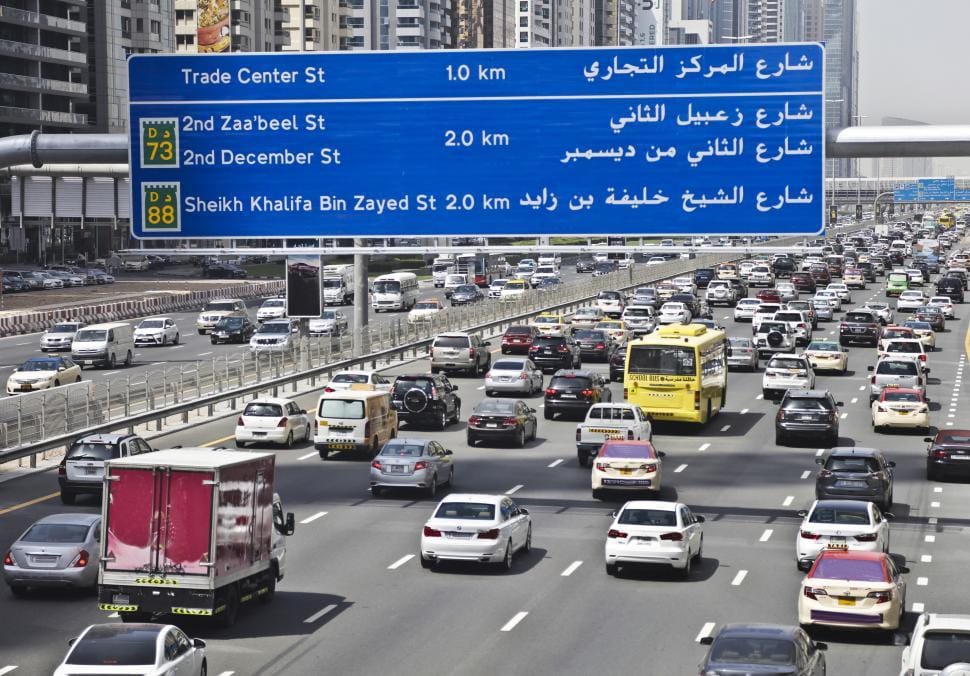
UAE traffic delays are becoming a growing concern in 2025, with new data showing that drivers are spending significantly more time on the road than in previous years. In some urban areas, annual delays are now approaching 45 hours per driver, highlighting the pressure placed on the country’s fast-growing transport network.
This rise in congestion reflects both economic growth and rapid population expansion. While the UAE continues to attract global talent and investment, its cities are now facing the challenge of keeping mobility smooth, efficient, and future-ready.
Why traffic congestion is increasing across the UAE
Several factors are contributing to longer commute times. First, population growth in cities such as Dubai, Abu Dhabi, and Sharjah has increased vehicle numbers on already busy roads. At the same time, commercial activity has intensified, especially during peak business hours.
In addition, flexible work schedules and hybrid office models have spread traffic more evenly throughout the day. As a result, congestion is no longer limited to traditional morning and evening rush hours. Instead, delays are appearing at multiple points across the daily commute cycle.
How new highways aim to reduce pressure on roads
To respond, UAE authorities are investing heavily in road infrastructure. New highways and expanded interchanges are being designed to improve traffic flow between residential zones, business districts, and industrial areas.
These upgrades focus on easing bottlenecks rather than simply adding lanes. Smarter junction design, better traffic signal coordination, and data-driven planning are now central to how road projects are developed. Over time, these improvements are expected to shorten travel times and reduce stop-and-go congestion.
Metro and rail projects reshaping daily commutes
Beyond roads, public transport plays a critical role in the long-term solution. Metro extensions and new stations are being introduced to connect growing communities with major employment hubs. These expansions encourage residents to shift away from private cars, especially for daily work travel.
At the same time, national rail projects are set to transform inter-city commuting. By offering faster and more reliable alternatives, rail networks can reduce dependence on highways, easing congestion across multiple emirates.
What this means for residents and businesses
For residents, longer commutes affect daily routines, productivity, and overall quality of life. Time spent in traffic can increase stress and reduce work-life balance, making efficient transport a key social issue.
For businesses, traffic delays impact logistics, employee punctuality, and operational costs. Therefore, improving mobility is not just a transport goal but an economic priority tied directly to the UAE’s competitiveness.
What to expect next
While UAE traffic delays have increased in 2025, the broader outlook remains forward-looking. Infrastructure investments, smart mobility systems, and public transport expansion signal a long-term strategy rather than short-term fixes.
If adoption of public transport continues to rise and road projects stay on schedule, commute times are expected to stabilize in the coming years. The challenge now lies in managing growth while ensuring that mobility keeps pace with the country’s ambitions.
Conclusion
UAE traffic delays highlight the pressure that rapid development places on urban mobility. However, with highways, metro lines, and rail projects moving forward together, the country is actively shaping a transport system built for the future. For residents and businesses alike, the coming years will be crucial in determining how smoothly daily life moves across the UAE.