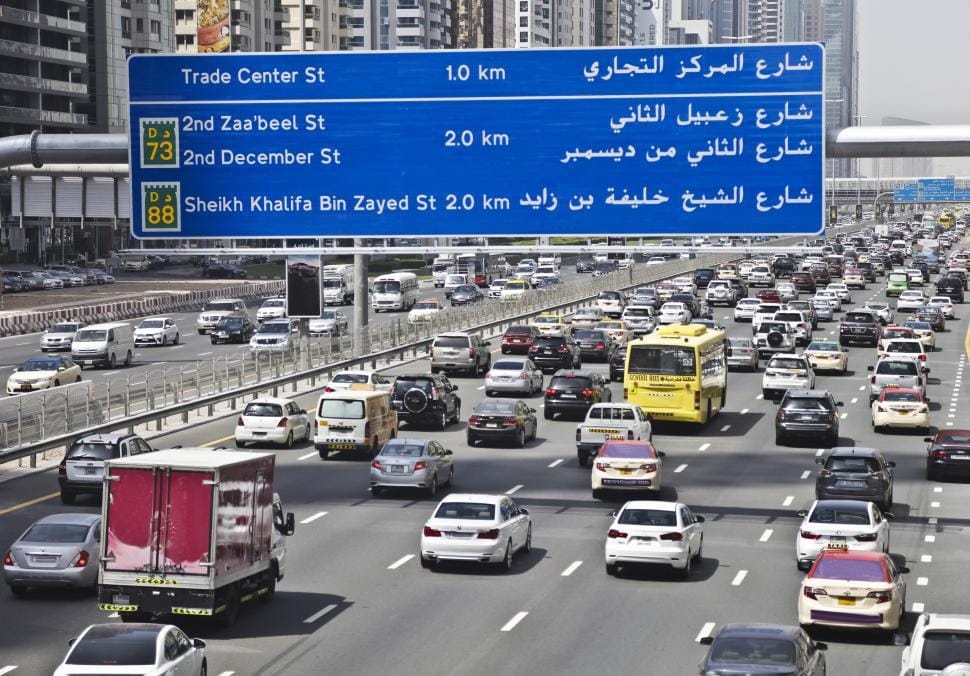

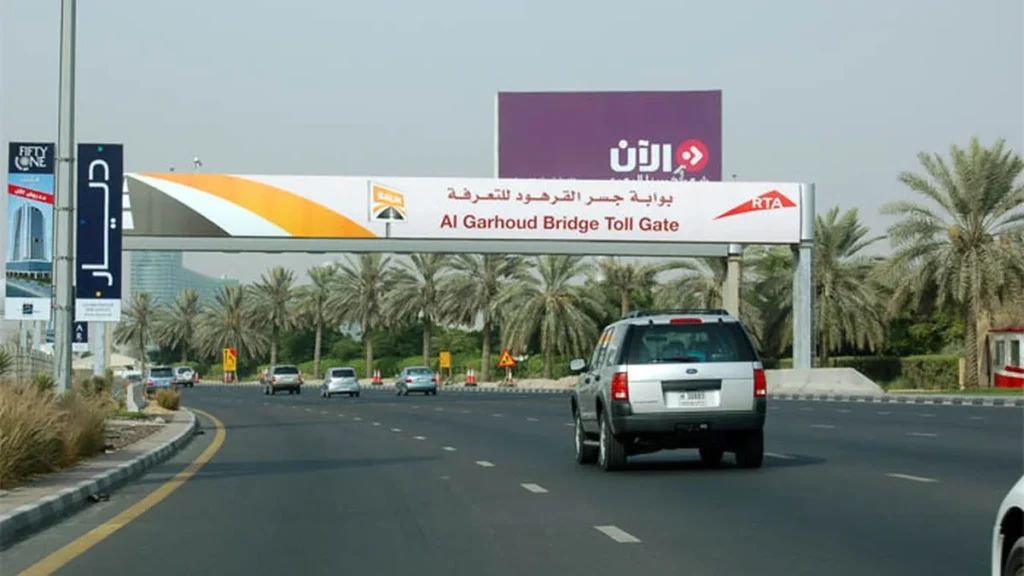
Salik is the electronic toll system of Dubai. It charges a fee each time a vehicle passes through a toll gate on a major road. The system uses radio frequency identification, known as RFID, to read a small tag on the windscreen of the vehicle. The fee is taken from the Salik account linked to the vehicle at once, so there is no need to stop or pay cash at the gate. The Salik toll system Dubai covers ten toll gates on the busiest roads of the city, and it helps to manage traffic flow during peak hours.
If you drive in Dubai, you will meet Salik gates on Sheikh Zayed Road, Al Khail Road, Al Ittihad Road and other main routes. The toll is small for one trip, but the cost can add up fast for a daily commute. A driver who crosses two gates each way, five days a week, can pay hundreds of dirhams a month. This guide explains how Salik works, where the gates are, what the toll costs at each time of day, how to buy and activate a tag, how to recharge, how to check a balance, what fines apply for unpaid tolls, and how to keep costs low.
The figures in this guide come from official and reputable sources, and they reflect the variable pricing that started in 2026. Toll rates now change with the time of day, and a 5 percent value added tax applies to each toll. Free hours run from 1 am to 6 am on most days, and Sundays follow a flat rate for the whole day. Read on for the full gate list, the rate table, the step by step process to register a tag, and the fines that apply when a toll goes unpaid.
What Is Salik and How Does It Work?
Salik is a road toll system that uses electronic tags and roadside readers. Each toll gate has a gantry across the road with antennas that read the tag on the windscreen as the vehicle passes under it. The system records the plate number of the vehicle, matches it to the Salik account, and takes the toll from the balance at once. There are no toll booths, no barriers and no cash payments, so traffic keeps moving at normal speed through each gate.
The Roads and Transport Authority, known as RTA, runs the road network where Salik gates stand. Salik works as a separate toll system on the main roads of Dubai, and it covers the routes that carry the heaviest traffic. The goal is to cut congestion on Sheikh Zayed Road and the other main corridors by asking drivers to pay a small fee at peak times. Drivers who plan a route can check the gate list in this guide and choose a free road or a different time of day when it suits them.
- Purchase a Salik tag and attach it to the windscreen of the vehicle.
- Activate the tag and link it to the Salik account.
- Keep enough balance in the account to cover the toll charges.
- Drive through a toll gate. The fee is taken at once through RFID.
A tag is small and light, and it sticks to the inside of the windscreen near the rear view mirror. The reader at the gate picks up the tag signal in a split second, so there is no need to slow down. If the tag is not read, the camera at the gate records the plate number, and the trip is matched to the account by the plate.
Salik Toll Gates and Locations in Dubai
Dubai has ten Salik toll gates, and they sit on the roads that link the main districts of the city. Most gates stand on Sheikh Zayed Road, which runs the full length of the city from the old districts in the north to Jebel Ali in the south. The other gates cover the crossings over Dubai Creek, the airport area and the road to Sharjah. The table below lists each gate with the road where it stands, so you can see at a glance which gates sit on your daily route.
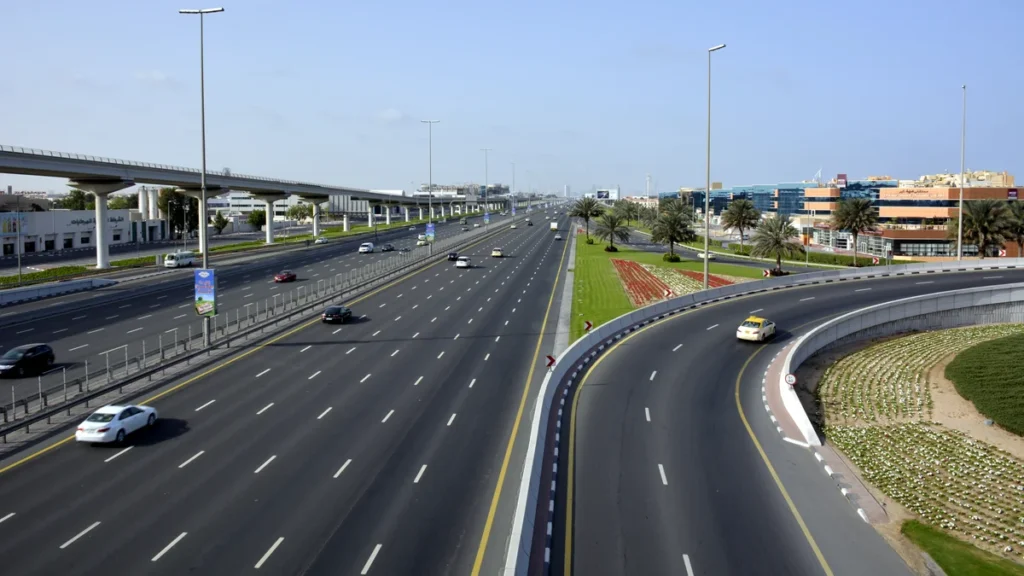
Four gates stand on Sheikh Zayed Road, and they sit close to the busiest interchanges of the city. Al Safa North and Al Safa South sit near the Al Safa area, Al Barsha sits near the Al Barsha district, and Jebel Ali sits near the southern end of the road. The other gates serve the creek crossings at Al Garhoud Bridge and Al Maktoum Bridge, the Business Bay Crossing on Al Khail Road, the Airport Tunnel on Beirut Street, and the Al Mamzar gates on Al Ittihad Road near the Sharjah border.
| Toll Gate | Road |
|---|---|
| Al Safa North | Sheikh Zayed Road |
| Al Safa South | Sheikh Zayed Road |
| Al Barsha | Sheikh Zayed Road |
| Business Bay Crossing | Al Khail Road |
| Al Garhoud Bridge | Sheikh Rashid Road |
| Al Maktoum Bridge | Umm Hurair Road |
| Al Mamzar North | Al Ittihad Road |
| Al Mamzar South | Al Ittihad Road |
| Airport Tunnel | Beirut Street |
| Jebel Ali | Sheikh Zayed Road |
New gates can be added and gate names can change, so check the official portal for the current list before you plan a long trip. The list above reflects the ten gates in service in 2026. If a route crosses more than one gate in a short time, the one hour rule in the next section can cut the toll, so read on before you count the cost of a trip.
How the Salik Gates Fit the Dubai Road Network
The ten gates do not sit at random points. They guard the main routes that carry traffic between the districts of Dubai. Four gates sit on Sheikh Zayed Road, two sit on the creek crossings, two sit on Al Ittihad Road near the Sharjah border, and the last two serve the airport tunnel and the Business Bay Crossing. A driver who crosses the city from one end to the other can pass several gates on a single trip, so the route matters as much as the distance.
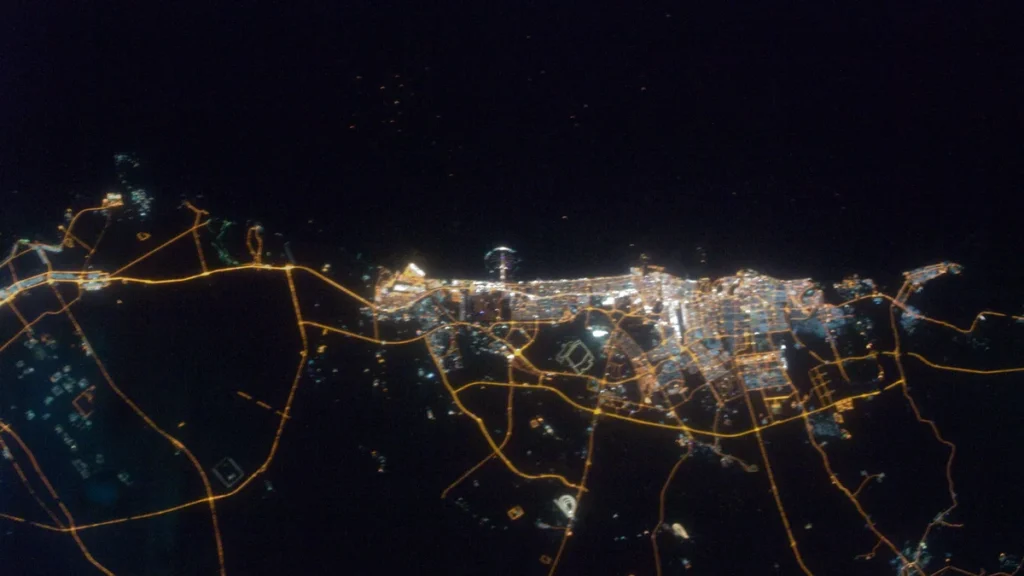
The one hour rule is the most useful fact for a driver who crosses more than one gate on a short trip. If you pass through Al Mamzar North and Al Mamzar South in the same direction within one hour, you are charged only once. The same rule applies to Al Safa North and Al Safa South. If you drive through Al Mamzar and then pass Al Safa in the same direction within one hour, you are also charged only once. The rule works in both directions, and it can save a second toll on a short trip across the city.
A route that looks short on a map can cross two or three gates, while a longer route on a free road can cost less. Before a regular commute, count the gates on each route and check the rate table in the next section. The one hour rule and the free hours together can cut the monthly toll bill by a large amount.
Salik Toll Rates, Timings and Free Hours
The toll rate depends on the time of day, and the system uses three price bands on Monday to Saturday. Peak hours run from 6 am to 10 am and from 4 pm to 8 pm, and each pass costs AED 6.30. Low peak hours run from 10 am to 4 pm and from 8 pm to 1 am, and each pass costs AED 4.20. Off peak hours run from 1 am to 6 am, and the gates are free. The amounts include 5 percent VAT, which has applied to all toll fees since June 2026.
| Period | Hours | Base Rate | Rate With VAT |
|---|---|---|---|
| Peak | 6 am to 10 am and 4 pm to 8 pm | AED 6 | AED 6.30 |
| Low peak | 10 am to 4 pm and 8 pm to 1 am | AED 4 | AED 4.20 |
| Off peak | 1 am to 6 am | AED 0 | Free |
| Sunday | All day, flat rate | AED 4 | AED 4.20 |
| Ramadan peak | 9 am to 5 pm | AED 6 | AED 6.30 |
| Ramadan low peak | 7 am to 9 am and 5 pm to 2 am | AED 4 | AED 4.20 |
| Ramadan off peak | 2 am to 7 am | AED 0 | Free |
On Sunday the flat rate applies all day, so each pass costs AED 4.20, but the free window from 1 am to 6 am still applies. During Ramadan the hours shift, and the free window moves to 2 am to 7 am. Toll charges still apply on public holidays unless a change is announced, so check the official portal before a holiday trip. Al Maktoum Bridge follows the same free window as the other gates, so the old idea of free crossings late at night no longer applies.
How to Buy and Activate a Salik Tag
A Salik tag is a small sticker with a chip, and it costs AED 100 at a petrol station or a dealer. The price includes AED 50 of credit, so the account starts with a balance that covers the first trips. You can also buy a tag online through the official Salik website or the Careem app, and through authorized petrol stations such as Emarat, EPPCO, ENOC and ADNOC. The tag number, the key, the Traffic Code number and a mobile number are needed to activate the tag.
- Buy a Salik tag from a petrol station, a dealer, the official Salik website or the Careem app.
- Stick the tag on the inside of the windscreen near the rear view mirror.
- Open the Salik website or app and choose the option to register and activate a tag.
- Enter the tag number, the key, the Traffic Code number and a mobile number.
- Wait for the activation message, then check the balance before the first trip.
You can also activate a tag by calling the Salik call centre on 800 72545, which is open 24 hours a day. Keep the tag number and the key safe, because you need them if the tag is lost or if you move the tag to a new vehicle. A tag that is not activated will not deduct tolls, and the plate can draw a fine for an unregistered vehicle, so check the status before you drive through a gate.
How to Recharge Your Salik Account
A Salik account needs a positive balance before a trip, because the toll is taken at once when the vehicle passes a gate. If the balance runs low, the driver gets a message, and a top up keeps the account in good order. The account can be recharged in several ways, so a driver can choose the method that fits the moment.
- Salik website: log in to the account and pay by card.
- Smart Salik app: open the app and top up the balance in a few taps.
- RTA Dubai app: use the RTA app to recharge the Salik account.
- SMS: send the account number, the PIN code and the recharge number to 5959.
- Self service machines and kiosks: top up the account at a machine.
- Petrol stations and authorized dealers: top up the account at the counter.
- Call centre: call 800 72545 to recharge by phone.
A bank app can also set an auto top up, so the balance is refilled when it falls below a set limit. The best habit is to check the balance each week and to top up before a long trip, because a low balance can draw a fine for insufficient funds. The next section explains how to check the balance and the trips on the account.
How to Check Your Salik Balance and Trips
A driver can check the Salik balance and the list of trips through the Salik website, the Smart Salik app or the RTA Dubai app. The fastest way by phone is SMS: send BAL to 5959, and the balance comes back in a reply. The call centre on 800 72545 can also give the balance, and kiosks show the balance on screen.
Check the trip list after a journey if a charge looks wrong, because the list shows each gate, the time and the amount. If the balance is low, top up at once, because a pass with a low balance can draw a fine. An account that stays unused for five years becomes inactive, and the balance left in it is lost, so keep the account active with a top up or a trip from time to time.
Salik Fines for Unpaid Tolls
A Salik fine is not a toll. It is a penalty for a breach of the rules, and it is added to the traffic file of the vehicle. The two fines that most drivers meet are for low balance and for an unregistered plate. A third fine applies to tampering with a tag or damage to Salik property, and it is much higher.
| Violation | Fine | Notes |
|---|---|---|
| Insufficient funds | AED 50 | Recharge within five working days; one per day per vehicle |
| Unregistered plate, first offence | AED 100 | Register within ten working days of the first trip |
| Unregistered plate, second offence | AED 200 | One per day per vehicle |
| Unregistered plate, later offences | AED 400 | Each later offence |
| Tampering or damage | AED 10,000 | May bring further legal consequences |
A violation can be disputed only within 13 months from the date it was added to the traffic file, so act fast if a charge looks wrong. Check violations and trips through the Smart Salik app, the RTA Dubai app or the Salik website, and pay a fine through the Salik website. The traffic fines guide explains how to check and pay other traffic fines in the UAE.
Alternatives to Driving Through Salik Gates
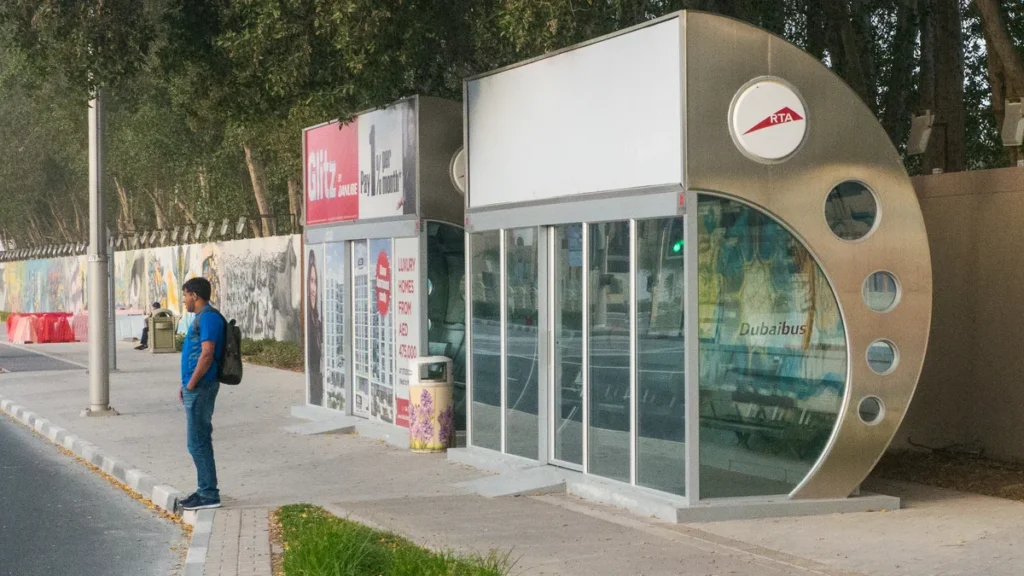
Public transport is the simplest way to avoid Salik gates. The Dubai Metro runs along Sheikh Zayed Road, and it passes the same districts that the toll gates guard. Buses cover the rest of the city, and a Nol card pays for both Metro and bus trips. The Dubai Metro Nol card guide explains the card types, prices and how to recharge.
A monthly transport budget can be far lower than a toll bill, and the cost of living in Dubai for expats guide puts transport costs in context. A free road, a different time of day or a shared ride can also cut the toll bill, so plan the route before each trip.
Tips to Reduce Your Salik Costs
- Travel in the free hours from 1 am to 6 am where possible.
- Shift trips out of the peak hours to pay AED 4.20 instead of AED 6.30.
- Use the one hour rule when you cross Al Mamzar or Al Safa gates.
- Take the Metro or a bus for regular trips along Sheikh Zayed Road.
- Keep the account topped up and set an auto top up in the bank app.
- Check the trip list each week and query any charge that looks wrong.
- Use a free road instead of a toll road when the extra time is small.
Small changes add up over a month. Two gate crossings each working day at the peak rate add up to more than AED 250 a month, so even one change in the routine can save a real amount. A driver who plans the route, the time and the balance before each trip keeps the Salik bill under control.
Conclusion
Salik is a simple system once the basics are clear. Buy a tag, activate it, keep the balance topped up and check the trip list each week. The rates are fixed by the time of day, the free hours run from 1 am to 6 am, and the one hour rule can cut the bill on short trips.
Plan the route before each trip, travel outside the peak hours where possible, and use the Metro or a bus when the toll gates guard the whole route. A driver who follows these steps pays only the tolls that the trip needs, and avoids the fines that come from a low balance or an unregistered plate.
FAQ
Salik is the electronic toll system of Dubai. It uses an RFID tag on the windscreen of the vehicle. A reader at each toll gate detects the tag and takes the toll from the account at once. There are no booths, no barriers and no cash payments.
The toll is AED 6.30 in the peak hours, AED 4.20 in the low peak hours, and free from 1 am to 6 am, Monday to Saturday. On Sunday the flat rate is AED 4.20 all day. The amounts include 5 percent VAT.
Buy a tag for AED 100 at a petrol station, a dealer, the official Salik website or the Careem app. The price includes AED 50 of credit. Activate the tag online or by calling 800 72545, with the tag number, the key, the Traffic Code number and a mobile number.
Recharge through the Salik website, the Smart Salik app or the RTA Dubai app. You can also send the account number, the PIN code and the recharge number by SMS to 5959, use a self service machine, top up at a petrol station or call 800 72545.
The fine for a low balance is AED 50 if you fail to recharge within five working days. An unregistered plate draws AED 100 for the first offence, AED 200 for the second and AED 400 for each later offence. Tampering with a tag or damage to Salik property draws AED 10,000.
Check the balance on the Salik website, in the Smart Salik app or in the RTA Dubai app. You can also send BAL by SMS to 5959 or call the Salik call centre on 800 72545. The trip list in the app or on the website shows each gate, time and amount.