
Dubai school admissions for expats can feel hard at first, but the process is clear once you know the steps. Dubai has more than 200 private schools, and each school sets its own admission dates, fees, and tests. This guide explains when to apply, how to apply, the KHDA rules, the age limits, the school fees, and the documents you need.
The Knowledge and Human Development Authority, known as KHDA, regulates private schools in Dubai. KHDA inspects each school and gives it a rating, and it approves the school fees each year. The main school intake starts in September, and a smaller intake starts in January. Most schools open applications about 12 months before the September start.
Read this guide from start to finish if you are new to Dubai. If you already live here, go straight to the section that matches your question, and use the tables to compare fees, curricula, and KHDA ratings. The figures in this guide are typical ranges for 2026 and 2027, based on data from KHDA, UAE government sources, and Dubai schools.
When Should I Apply for School Admission in Dubai?
The main school intake in Dubai starts in September, at the start of the academic year. Most private schools in Dubai began the 2026-27 academic year on Monday, August 31, 2026. A smaller intake starts in January, at the start of the second term. A child can also join a school during the year if a place is free, but the best choice of schools is in September.
Popular schools open applications about 12 months before the September start. For a September start, applications often open in October or November of the year before. The admission process takes 6 to 8 weeks from the first enquiry to the final offer, so start early and do not wait for the last month. A late application can still work, but the popular year groups fill fast.
The table below shows the admission timeline for a September start. Use it to plan each step, and keep a copy of each date. If you move to Dubai during the year, contact the school at once, because a school can offer a place in January or in the middle of a term when a seat opens.
| Step | When |
|---|---|
| Shortlist schools | 12 months before September |
| Submit applications | October to December |
| Admission tests and interviews | January to March |
| Offers and registration | February to April |
| Pay the registration deposit | Within 2 weeks of the offer |
| School starts | Late August or early September |
Start the search early, because the best schools fill their places first. A school can place your child on a waiting list when a year group is full, and a place can open later in the year. Keep in touch with the admissions office, and keep your documents ready so you can act fast when a place opens.
How to Apply for School Admission in Dubai
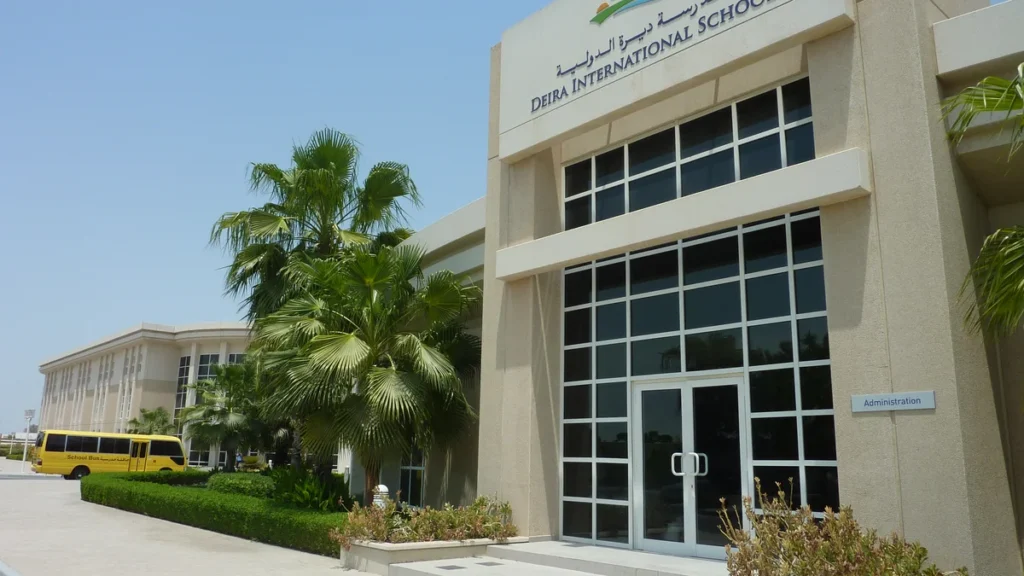
Most schools in Dubai take applications online, through the school website. A parent fills in the application form, uploads the documents, and pays the application fee. The school then invites the child for an assessment or an interview. The school sends an offer when the child passes the assessment and a place is free.
The steps below show how to apply for school admission in Dubai. Start with the school website, and read the admission page for the year group of your child. Each school has its own rules, so check the age limit, the documents, and the fees before you apply. Apply to at least two schools, so you have a second choice if the first school has no place.
- Choose the curriculum and shortlist 3 to 5 schools
- Check the KHDA rating and the fees of each school
- Fill in the online application form on the school website
- Upload the documents and pay the application fee
- Take the child to the admission test or an interview
- Accept the offer and pay the registration deposit
- Passport copies of the child and both parents
- Emirates ID copies of the child and both parents
- Residence visa copies of the child and both parents
- Birth certificate of the child
- Vaccination record of the child
- School reports from the last 2 years
- Transfer certificate from the last school
Keep the Emirates ID valid, because the school and the KHDA need it to register a child. The Emirates ID renewal guide explains how to renew the card online. Give the school the documents in full, because a missing paper can delay the offer. Keep a copy of each document on the phone, so it is ready when the school asks for it.
Choosing a School: British, American and IB Curricula

Dubai schools follow many curricula and the British, American, and IB curricula are the most common for expat families. The British curriculum leads to GCSEs and A Levels, and it suits a family that plans to move to the UK or to a British school in another country. The American curriculum leads to a high school diploma, and it suits a family that plans to move to the United States.
The International Baccalaureate, known as IB, is a global curriculum that leads to the IB Diploma, and it suits a family that moves between countries. Indian schools follow the CBSE or ICSE curriculum, and they suit a family from India. Choose the curriculum that fits the future plans of your family, the learning style of your child, and the budget.
| Curriculum | Ages | Leaving exams |
|---|---|---|
| British | 3 to 18 years | GCSEs and A Levels |
| American | 3 to 18 years | High school diploma |
| International Baccalaureate (IB) | 3 to 18 years | IB Diploma |
| Indian (CBSE/ICSE) | 3 to 18 years | CBSE or ICSE exams |
Visit at least two schools before you choose, and meet the teachers and the head of the school. A school tour shows the classes, the sports fields, and the labs, and it helps you see if the school fits your child. Ask the school for the KHDA rating, the fees, and the results of the last inspection before you apply.
KHDA School Ratings in Dubai
KHDA inspects each private school in Dubai and gives it a rating. The rating shows the quality of teaching, the progress of students, and the care of children. The five ratings are Outstanding, Very Good, Good, Acceptable, and Weak. A school with a high rating often has high fees, but a Good school can also give a strong education at a lower price.
In the latest KHDA inspection round, 23 schools earned the Outstanding rating, 48 schools earned Very Good, 85 schools earned Good, 51 schools earned Acceptable, and 2 schools earned Weak. Use the rating as one guide, not the only guide. A school visit, the fees, the location, and the needs of your child matter just as much as the rating.
| KHDA rating | Schools | What it means |
|---|---|---|
| Outstanding | 23 | The best quality of teaching and care |
| Very Good | 48 | High quality in most areas |
| Good | 85 | Sound quality in most areas |
| Acceptable | 51 | The minimum quality that KHDA accepts |
| Weak | 2 | The school must improve fast |
Check the KHDA rating on the KHDA website before you apply, and read the full inspection report for the school. The report explains the strengths of the school and the areas that need work. A school that improves its rating each year shows that it listens to KHDA and to parents.
How Much Are School Fees in Dubai for Expats?
The cost of school fees in Dubai for expats changes with the curriculum, the grade, and the school. KHDA approves the fees of each school, and KHDA froze school fees for the 2026-27 academic year, so fees did not rise this year. An Indian curriculum school costs about AED 5,000 to AED 30,000 a year. A British curriculum school costs about AED 15,000 to AED 100,000 a year. These figures are typical ranges, and the exact fee depends on the school and the grade.
An American curriculum school costs about AED 20,000 to AED 90,000 a year, and an IB school costs about AED 30,000 to AED 110,000 a year. Fees rise with the grade, so a secondary school place costs more than a nursery place. The table below shows the typical fees for each curriculum. Ask the school for the full fee list, and check what the fee covers, such as books, uniforms, and exams.
| Curriculum | Typical fees per year |
|---|---|
| Indian (CBSE/ICSE) | AED 5,000 to AED 30,000 |
| British | AED 15,000 to AED 100,000 |
| American | AED 20,000 to AED 90,000 |
| International Baccalaureate (IB) | AED 30,000 to AED 110,000 |
Fees do not cover everything, so ask about the extra costs before you sign. A school can charge extra for the school bus, for meals, for uniforms, for books, and for after-school clubs. The school must give a clear list of all fees, and the parent must sign a parent-school contract that sets out the fees and the rules.
School Admission Age Requirements in Dubai
KHDA sets the age rules for school admission in Dubai, and each school follows them. From the 2026-27 academic year, the age cut-off is 31 December of the admission year. This rule is new, and it changed from the old cut-off of 31 August. A child must be the right age by 31 December to join a year group, and the school checks the birth certificate to confirm the age.
A child must be 3 years old by 31 December to join Pre-KG or FS1, and 4 years old by 31 December to join KG1 or FS2. A child must be 5 years old by 31 December to join KG2 or Year 1, and 6 years old by 31 December to join Grade 1 or Year 2. The table below shows the age for each year group. If your child turns the right age just after 31 December, the child joins the lower year group, and the school can advise you on the best year for your child.
| Year group | Age by 31 December |
|---|---|
| Pre-KG (FS1) | 3 years |
| KG1 (FS2) | 4 years |
| KG2 (Year 1) | 5 years |
| Grade 1 (Year 2) | 6 years |
| Grade 2 (Year 3) | 7 years |
| Grade 6 (Year 7) | 11 years |
Check the age of your child against the table before you apply, because a school cannot place a child in the wrong year group. The age rule applies to all private schools in Dubai, and the school uses the birth certificate as proof. If you move from a country with a different school year, the school can test your child to find the right year group.
Admission Tests and Interviews
Most Dubai schools test a child before they offer a place. A young child takes a short play-based assessment, where a teacher watches the child play, talk, and follow simple tasks. An older child takes a written test in English and maths, and the school may also test science. The test shows the level of the child, and it helps the school place the child in the right year group.
A school may also meet the parents for a short interview, to learn about the child and the family. The interview is not a test, and it helps the school know the needs of the child. The list below shows how to prepare for the test and the interview. A calm child does better, so keep the day relaxed and do not put pressure on the child.
- Read with your child each day in the weeks before the test
- Practise simple maths sums and English words at home
- Tell the child that the test is a short visit to a new school
- Bring the child to the school on time, with water and a snack
- Answer the interview questions in a simple and honest way.
The school sends the result in a few days, and it can offer a place, place the child on a waiting list, or ask for more time. If the child does not pass, ask the school what to work on, and apply again next term or to another school. A test result is not a verdict on your child, and many children pass on the second try.
School Transport in Dubai
Most private schools in Dubai run a school bus service, and the bus picks up the child near home each morning and drops the child back each afternoon. The bus fee changes with the distance and the operator, and it costs about AED 5,000 to AED 10,000 a year. Some schools run their own buses, and some schools use a bus company. Ask the school for the bus routes, the pick-up time, and the fee before you sign.
The school bus is safe, and each bus has a trained driver and a bus attendant who looks after the children. The bus has seat belts, and the school tracks the bus with GPS. School bus fees rose by 3 to 5 percent for the 2026-27 academic year. The list below shows what to check before you choose the bus service.
- Check the pick-up time and the drop-off time for your area
- Ask if the bus has a trained attendant on every trip
- Check the fee and ask if it covers both terms of the year
- Ask how the school tells parents when a bus is late
- Visit the bus stop and check that it is safe for your child.
A bus can add up to 2 hours to the school day for a child who lives far from the school, so choose a school near home when you can. If the school is far, the child spends a long time on the bus each day, and the child reaches home tired. A school near home saves time, money, and energy for the whole family.
Government Schools and Other Options for Expats
Expat children can attend a UAE government school, but most expat families choose a private school. A government school teaches in Arabic, and it follows the UAE Ministry of Education curriculum. Expat students can join a government school on payment of AED 6,000 a year in tuition fees, and the school must have a free place. The child must pass an Arabic test in some cases, so check with the school first.
A family can also choose a nursery for a child under 4 years old, and a nursery prepares the child for school. Dubai has many nurseries, and they follow the British, American, or IB early years curriculum. The list below shows the other options for expat families. Each option has its own rules, fees, and age limits, so check them before you decide.
- Government school, with Arabic as the main language
- Private school, with a British, American, IB, or Indian curriculum
- Nursery, for a child under 4 years old
- Home learning, with a parent or a tutor at home.
Most expat families choose a private school, because the private schools teach in English and follow a global curriculum. A government school suits a family that wants the child to learn Arabic and join the local community. Talk to other parents in Dubai, visit the schools, and choose the option that fits your child and your budget.
Tips to Choose the Right School in Dubai
Use the tips below to choose a school that fits your child. A good school has strong teaching, a safe campus, and a fair fee. Compare at least two schools before you apply, and visit each school in person before you sign.
- Compare the KHDA rating of at least two schools
- Check the fees and the extra costs for the bus and books
- Visit the school and meet the teachers and the head
- Check the distance from home and the bus routes
- Ask about the class size and the number of children in each class
- Check the extra activities, such as sports, music, and clubs
- Read the parent-school contract before you sign it.
A cheap school can cost more in the end if the school is far from home or if the fees rise fast. A school with a high KHDA rating and a strong record gives peace of mind, but the best school is the one that fits your child. Choose the school that makes your child happy, safe, and keen to learn.
Conclusion
Dubai school admissions for expats follow a clear process, and the key is to start early. Apply about 12 months before the September start, shortlist 3 to 5 schools, and keep the documents ready. Check the KHDA rating, compare the fees, and visit the schools before you choose.
The right school gives your child a strong start in Dubai, and it helps the whole family settle in. Apply to at least two schools, prepare your child for the test, and sign the parent-school contract only after you read it in full. A good school is worth the effort, and your child will thank you for it.
FAQ
Apply about 12 months before the September start. Popular schools open applications in October or November of the year before, and the admission process takes 6 to 8 weeks. A smaller intake starts in January, and a child can also join during the year if a place is free.
You need passport copies and Emirates ID copies of the child and both parents, residence visa copies, the birth certificate of the child, the vaccination record, school reports from the last 2 years, and a transfer certificate from the last school. The school may also ask for passport photos of the child.
An Indian curriculum school costs about AED 5,000 to AED 30,000 a year. A British curriculum school costs about AED 15,000 to AED 100,000 a year. An American curriculum school costs about AED 20,000 to AED 90,000 a year, and an IB school costs about AED 30,000 to AED 110,000 a year. KHDA froze school fees for the 2026-27 academic year.
From the 2026-27 academic year, the age cut-off is 31 December of the admission year. A child must be 3 years old by 31 December to join Pre-KG or FS1, 4 years old for KG1 or FS2, 5 years old for KG2 or Year 1, and 6 years old for Grade 1 or Year 2.
KHDA inspects each private school in Dubai and gives it one of five ratings: Outstanding, Very Good, Good, Acceptable, or Weak. The rating shows the quality of teaching, the progress of students, and the care of children. In the latest inspection round, 23 schools earned Outstanding, 48 earned Very Good, 85 earned Good, 51 earned Acceptable, and 2 earned Weak.
Yes. Expat students can attend a UAE government school on payment of AED 6,000 a year in tuition fees, and the school must have a free place. A government school teaches in Arabic and follows the UAE Ministry of Education curriculum. Most expat families choose a private school, because private schools teach in English and follow a global curriculum.