

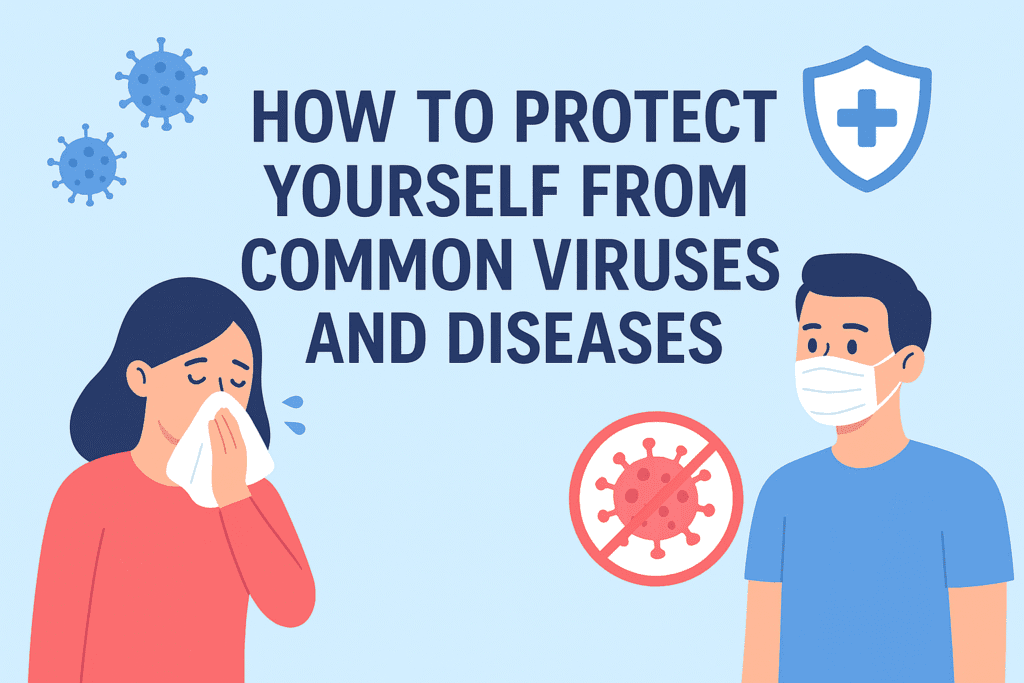
How to Protect Yourself: Staying healthy in today’s world is more important than ever. Every year, common viral infections and diseases spread quickly—sometimes because of weather changes, sometimes because of weak immunity, and sometimes due to poor hygiene. Whether it is the flu, dengue, COVID-19, stomach infections, chest infections, or seasonal viral fevers, these illnesses can affect adults, children, and older people equally.
The good news is: most diseases can be prevented with simple lifestyle changes and proper hygiene. This article explains the most common viruses, why they spread, and how you can protect yourself and your family.
Understanding Common Viruses and Diseases
Below are the illnesses that usually spread fast in many countries, especially during seasonal changes:
1. Influenza (Flu Virus)
The flu spreads mostly in winter and cold weather. It causes fever, body pain, cough, headache, and tiredness.
2. COVID-19 and Respiratory Viruses
These viruses spread through air and close contact. Symptoms include fever, cough, chest tightness, and breathing difficulty.
3. Dengue Virus
Dengue spreads through mosquito bites. High fever, joint pain, headache, and low platelet count are common signs.
4. Stomach or Food-Related Infections
Caused by unhygienic food or contaminated water, leading to vomiting, diarrhea, stomach cramps, and dehydration.
5. Seasonal Viral Fever
Common during weather change—mild fever, weakness, cold, and body ache.
6. Skin Infections
Bacterial or fungal infections spread due to heat, sweat, and poor hygiene.
How Do These Diseases Spread?
Understanding the cause helps you avoid the risk.
Most viruses spread through:
- Air droplets when someone coughs or sneezes
- Close physical contact
- Touching contaminated surfaces like doorknobs, phones, keyboards
- Mosquito bites (dengue, malaria)
- Dirty food or unclean water
- Poor sanitation and hygiene
Proven Ways to Protect Yourself From Viruses and Diseases
1. Strengthen Your Immune System
Good immunity is your strongest defense.
How to boost immunity naturally:
- Eat fruits rich in Vitamin C (orange, kiwi, lemon)
- Add vegetables like spinach, broccoli, carrots
- Take zinc-rich foods (eggs, nuts, beans)
- Drink at least 8–10 glasses of water daily
- Do exercise or walking for 20–30 minutes
- Sleep 7–8 hours daily
- Avoid junk food and sugary drinks
2. Wash Your Hands Properly
Almost 80% of common infections spread through hands.
Always wash your hands:
- Before eating
- After using the washroom
- After touching surfaces in public
- After coughing or sneezing
- After returning home from outside
Use soap for at least 20 seconds. If water is not available, use a sanitizer with 70% alcohol.
3. Keep Your Surroundings Clean
Viruses survive on surfaces for hours.
Keep clean:
- Mobile phones
- Door handles
- Keyboards and laptops
- Kitchen surfaces
- Tabletops
- Bathroom areas
A clean environment means fewer germs.
4. Eat Safe and Fresh Food
Most stomach infections come from dirty or improperly cooked food.
Tips:
- Avoid roadside food in unhealthy areas
- Drink clean, filtered water
- Avoid old, reheated, or spoiled meals
- Wash fruits and vegetables properly
- Cook meat and chicken thoroughly
5. Protect Yourself From Mosquitoes
For dengue and malaria, mosquito prevention is the key.
How to stay safe:
- Use mosquito repellent
- Keep your water tank covered
- Avoid standing water near your home
- Use mosquito nets, especially at night
- Wear long sleeves in mosquito-prone areas
6. Wear a Mask in Crowded Places
This reduces the spread of respiratory viruses like COVID-19 and flu.
When should you wear a mask?
- If you have cough or fever
- While traveling
- In hospitals or clinics
- During seasonal outbreaks
7. Don’t Ignore Early Symptoms
Early treatment stops complications.
Seek help if you have:
- High fever for more than 2 days
- Trouble breathing
- Continuous vomiting
- Severe headache
- Skin rashes
- Sudden body weakness
Quick action helps recovery.
Healthy Daily Habits to Stay Disease-Free
1. Maintain Good Hygiene
- Take a bath daily
- Keep nails trimmed
- Change clothes after returning home
- Keep your room ventilated
2. Stay Hydrated
Water helps flush toxins from your body.
- 2–3 liters a day is ideal
- Add lemon water or coconut water for extra minerals
3. Exercise Regularly
Even simple activities help:
- Walking
- Cycling
- Stretching
- Light yoga
Exercise improves immunity, strength, and lung capacity.
4. Manage Stress
Stress weakens the immune system.
Try:
- Deep breathing exercises
- Listening to relaxing music
- Spending time with family
- Sleeping properly
Final Thoughts
Staying safe from viruses and diseases is not difficult. You don’t need expensive medicines or complicated routines. With cleanliness, good food, proper sleep, exercise, and early care, you can protect yourself and your family easily.
Healthy habits today will give you a stronger, safer tomorrow.