

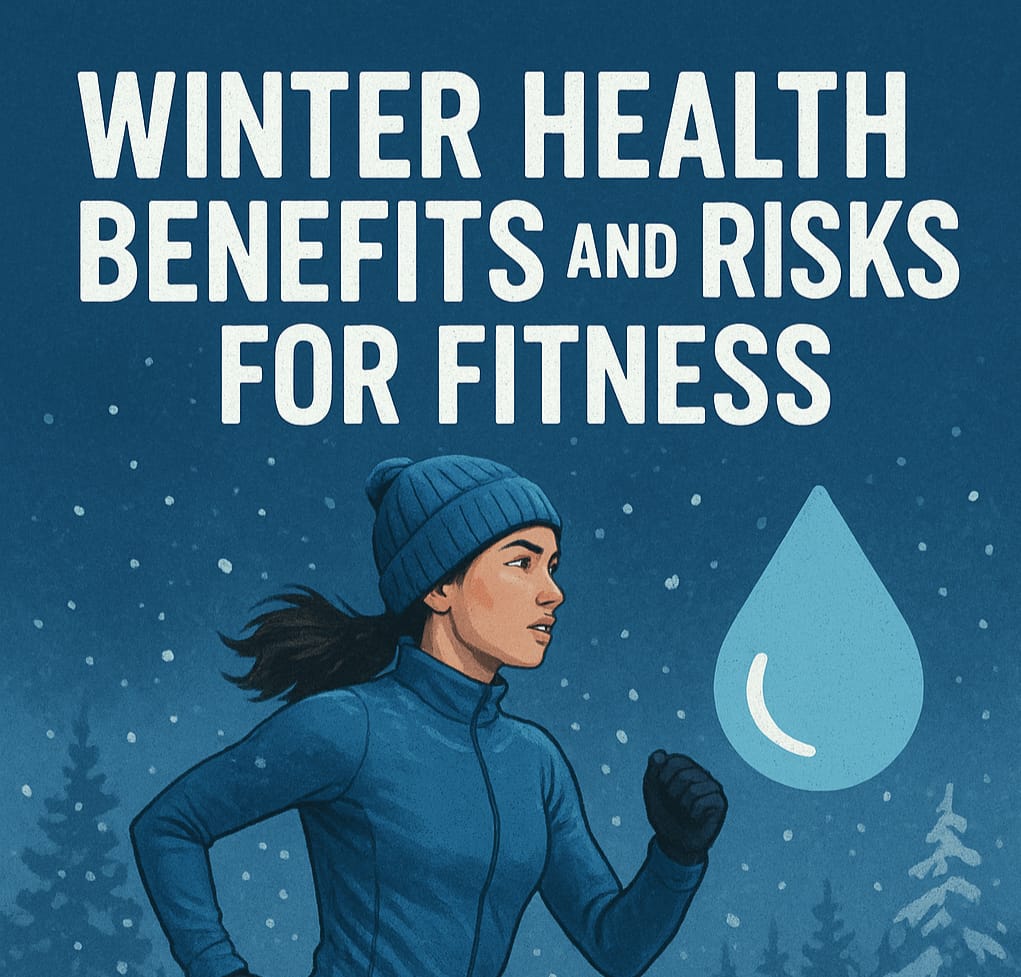
❄️ Winter Health Benefits and Risks for Fitness: The Ultimate Guide to Staying Fit and Hydrated
3 Most Important Winter Health Benefits and Risks for Fitness _ Winter often presents a paradox: the crisp, cool air motivates some to exercise, while the short, dark days tempt many into hibernation. For those dedicated to wellness, understanding the specific Winter Health Benefits and Risks for Fitness is crucial. This season brings unique physiological challenges, from decreased immunity to deceptive dehydration, but also offers distinct advantages for endurance and mental health.
This in-depth guide provides essential strategies to keep your fitness regime on track and your body optimally hydrated throughout the colder months.
The Silent Dangers: Winter Health Risks (Nuksaan)
While winter feels cozy, it poses several invisible threats to your health and fitness goals:
1. Deceptive Dehydration (The Water Problem)
This is one of the most significant and overlooked risks. In winter, the air is drier, and sweat evaporates quickly, leading to what is called deceptive dehydration.
- The Risk: You feel less thirsty, but your body loses just as much water through respiration (breathing out dry air) and sweat evaporation. This leads to fatigue, muscle cramps, and decreased performance during workouts.
- The Hydration Imperative: Maintaining consistent water intake is vital. Focus on drinking water even when not thirsty, and incorporate hydrating foods and warm, non-caffeinated drinks.
2. Suppressed Immunity and Seasonal Illness
The lack of sunlight reduces Vitamin D production, which is essential for immune function. Coupled with spending more time indoors, the risk of catching colds, flu, and other respiratory illnesses increases significantly.
3. Cold Muscles and Injury Risk
Cold temperatures cause muscles to contract, making them less pliable. Starting exercise with cold muscles increases the risk of strains and tears.
- Mitigation: Extended warm-ups (10-15 minutes instead of the usual 5) focusing on dynamic stretching are mandatory before any strenuous winter activity.
Harnessing the Cold: Winter Health and Fitness Benefits (Faida)
Winter exercise offers profound, often superior, benefits compared to warmer seasons:
1. Enhanced Calorie Burn and Metabolic Boost
When exercising in the cold, your body works harder just to maintain its core temperature. This process, known as thermogenesis, increases your metabolism, meaning you can burn more calories during the same workout duration.
2. Superior Endurance Performance
Winter heat fatigue is non-existent. Without the stress of overheating, your cardiovascular system operates more efficiently.
- The Advantage: Athletes often find they can run or cycle for longer periods without feeling the need to stop, leading to significant gains in cardiovascular fitness and endurance.
3. Mental Resilience and Mood Lift
Committing to fitness when it’s cold and dark builds immense mental toughness. Physical activity boosts endorphins, which are natural mood elevators, directly counteracting the symptoms of Seasonal Affective Disorder (SAD).
The Winter Fitness Toolkit: Essential Strategies for Success
To maximize the Winter Health Benefits and mitigate Risks for Fitness, a targeted strategy is needed:
1. Strategic Hydration: The Role of Water
Don’t rely on thirst; rely on a schedule.
- Use Warm Water: Drinking warm or lukewarm water and herbal teas is more appealing in the cold.
- Monitor Urine Colour: Aim for pale yellow. Dark urine is the single best sign of dehydration.
- Increase Electrolytes: Use sports drinks or natural sources if your workout lasts longer than 60 minutes. [Internal Link to related article on Healthy Lifestyle/Hydration]
2. Layering for Optimal Core Temperature
Adopt the three-layer system for outdoor activity: Base (wicks moisture), Mid (insulation), and Outer (wind/water protection).
- The Golden Rule: Dress as if it is 20 degrees Fahrenheit warmer than the actual temperature.
3. Vitamin D and Immune Support
Consult a doctor for a Vitamin D level check. Supplements are often necessary during winter months. Focus on immune-boosting nutrients like Vitamin C and Zinc. [External Link to Trusted Health Organization on Vitamin D]
Conclusion: Making Winter Your Strongest Season
Successfully navigating the Winter Health Benefits and Risks for Fitness requires discipline, planning, and a deep understanding of your body’s needs in the cold. By proactively addressing deceptive dehydration, prioritizing extended warm-ups, and strategically layering for outdoor activity, you transform winter from a period of stagnation into a season of peak performance and enhanced calorie burn.
The key to winter wellness is consistency; don’t hibernate—hydrate, dress wisely, and utilize the cold air to push your endurance to new limits.